5 Africa Tech themes to Watch from 2016-2020
2015 was a fascinating year in tech on the continent for both startups and big companies alike as the ecosystem starts to mature, here are some of the most important tech trends to watch in the next 5 years.
- 1) China’s Tech Influence continues to challenge the West with more activity in Software and Services.
When Savannah Fund started, it was almost impossible to convince American techies that Smartphones were going to take off in Africa because they imagined iPhones and Blackberries as the primary devices at a time when feature phones vs Smartphones were distinct low and high end segments (admit it: Do you still have that idealized view of a Masai holding a feature phone checking market prices popularized by the media?). Chinese firms running Android such as Tecno and Huawei that have taken on this challenge to sell Smartphones in Africa not only in the sub $100 segment but also in competitive middle end range between $150-300. Chinese OEMs made dual simcard phones the standard and companies like Xiaomi have customized Android with MIUI to make compelling devices who made their Africa debut this year.

Xiaomi Launches the Redmi 2 and Mi4 Smartphones low to middle end segments $100-300. Both handsets support 4G networks
- 2) Corporate Venture Capital increases but most still figuring out strategy in the next 2 years:
In 2015 we saw more momentum in Corporates entering the VC space. The best area to observe this is the traditional “fintech vs banking” battleground. Safaricom made their first investment out of their Spark Fund together with us in Sendy in Kenya. Interswitch (Banking) also invested in the logistics/cash on delivery sector in Nigeria with Africa Courier Express. Barclays is bringing Techstars to South Africa, whilst RMI (the insurance giant) launched their Alphacode workspace (where we held our 3rd fintech conference, Afrikoin) in Sandton this year which also comes with a Fund. What is encouraging is the diversity of approach not just beyond funds but in some players investing in the ecosystem with workspaces, accelerators and often supporting/pushing innovation on their platforms (e.g. Wechat Africa Fund?). However, I believe most of the new entrants will take at least 2 years to figure out if their fund and innovation investment strategies are panning out for the long term, an economic slowdown or increasing competition might make banks and telcos more cautious and may pull back their experiments or “CSR” pet projects. Entrepreneurs should watch to understand which Corporate VCs are playing the long game vs short term projects, because in the end startups are 5-10 year long journeys to achieve full potential. Expect to see exits where startups sell out early via Corporate VCs on the continent, not necessarily a bad thing if there are limited options for growth or further funding. Outside the Fintech sector, Microsoft with 4Africa initiative made an investment in Wifi, Facebook will push their Free Basics initiatives soon supported by a fund are further examples in this trend and almost every month I hear of a corporate planning a Venture Fund or to “support African innovation”.
- 3) Pan Africa trade enabled by Tech begins to move in the right direction but still remains tough.
Many startups will struggle to reach multi-country scale, Africa’s share of global trade still remains low at below 4%. One of the biggest stories towards the end of this year is how Safaricom and Central Bank in Kenya edged out Bitcoin companies such as Bitpesa and Kipochi and one of the best narratives that Bitpesa has maintained is that they are pan Africa and don’t just depend on Safaricom M-Pesa for distribution in Kenya, even though it might be the best for reach currently. This narrative is already playing out with many firms that have succeeded from Cellulant, KopoKopo and MoDe who are often operating in 15+ countries and even expanding to Asia. The number one advice I give entrepreneurs is to think Pan Africa. It’s hard to find a tech startup worth more than $100M in the last 5 years that has remained in its own country. Growth is elusive. The single country risks in Africa are real and beyond the usual political stability but now include monopolistic incumbent players, Non Market and even Currency risks- at the extreme startups are often better being offshore to hedge even though their primary market is Africa. In our portfolio of 21 companies, 4 companies are registered outside of Africa and we can expect each year a few to reincorporate overseas picking friendly and stable jurisdictions. As an example, take Nigeria, where recent Government moves to restrict use of USD on debit/credit cards and I have heard Nigerian startups complain they can’t even use their local cards to settle Facebook ads or Mailchimp credits spending.
- 4) Talent remains a big constraint for Africa startups at all levels
From entry level developers to Product Manager and CEOs, COOs there is one universal agreement by most that the talent market is tight on the continent. We saw companies in our portfolio take up to 1 year to find executives or middle management or experienced technical hires that are essential in taking a startup to the next phase. (often from Product Market Fit to Growth or Post Series A). Coding schools have started to thrive recently and we will continue to see them accelerate in 2016 – examples include Andela (Nigeria), CodeX (South Africa) to Moringa School (Kenya) covering East, West and South Africa.
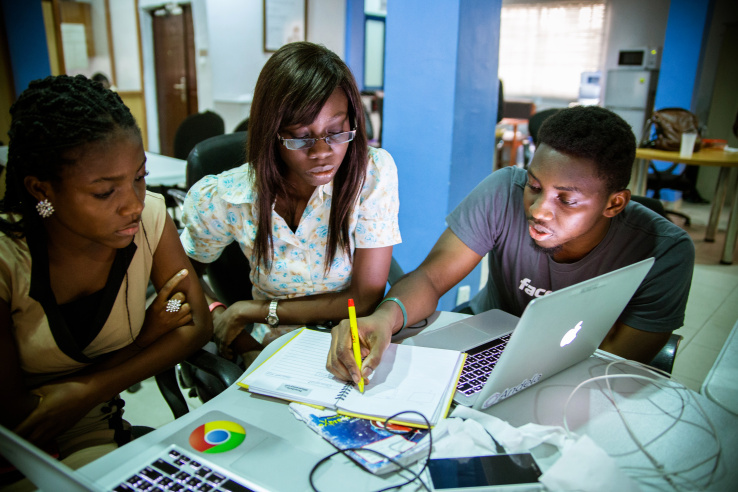
Africa’s got talent? How is tech talent nurtured?
- 5). The convergence of Energy and Telecoms/Internet to define Opportunities for the next 500M users in Africa.
Finally the break out successes of solar financing and installer companies M-KOPA (Kenya) and OffGrid Electric (Tanzania) in what is considered one of the most important markets in Africa today in reaching the bottom of the pyramid to both transform lives whilst also saving the planet from climate change will lead to hundreds of millions of Africans getting connected with clean energy which in turn will support use cases that begin from charging millions if not billions of smartphones by 2020. The other side of the equation is can these new consumers, often bottom of the pyramid afford the internet? From Internet.org (renamed Free Basics) to Project Loon and even more local projects such as Mawingu Networks in Kenya that combines solar with broadband Wifi or even BRCK that is extending its “backup generator for the internet” paradigm into schools.
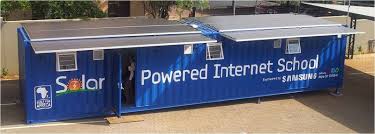
Solar Powered internet school built on containers
I want to wish everyone a Happy New Year and look forward to another year of tech progress in 2016 on the continent. Special thanks to our investors and 21 portfolio companies in 6 countries we have the privilege of working with.